
📅 Published on September 18, 2025 🔄 Updated on May 8, 2026
A Romanian off-road adventure requires careful route planning, proper vehicle preparation, and awareness of local regulations. Romania’s Carpathian Mountains, Apuseni highlands, and Danube Delta deliver some of Europe’s most rewarding off-road terrain — but access rules vary significantly by region. Knowing which forest roads require permits and which zones fall under protected land classification can save you from fines and costly dead ends.
Planning a Romanian off-road adventure is both exciting and surprisingly complex for drivers who haven’t navigated the country’s terrain before. Romania’s landscapes shift dramatically — from dense Carpathian forests and high-altitude mountain passes to the remote wetlands of the Danube Delta — and each region carries its own access conditions, seasonal limitations, and legal requirements.
Many travelers arrive with a capable 4×4 and an appetite for adventure, only to discover that certain forest roads are controlled by Romsilva, Romania’s national forestry administration, or that protected areas demand advance permits. Getting those details right before you leave home isn’t just good planning — it’s the difference between a memorable journey and a very expensive setback.
Choosing the Right Off-Road Region in Romania
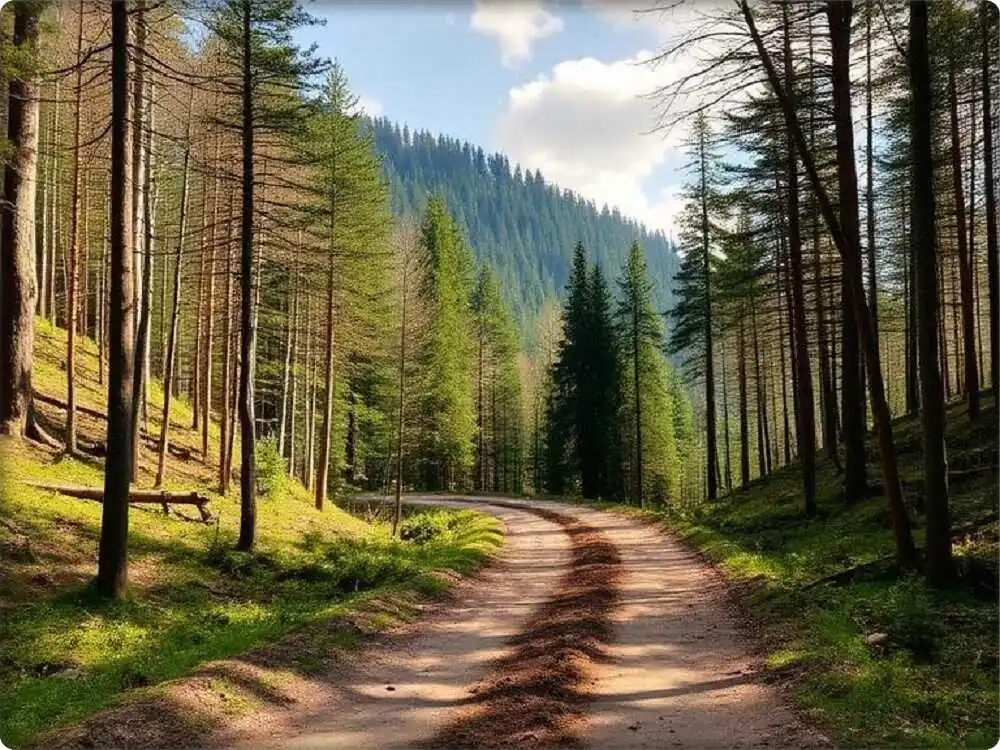
Romania’s geography is unusually diverse for a country its size. The Carpathian arc cuts through the center of the country, dividing Transylvania from Moldova and Wallachia. For off-road driving, this translates into dramatically different terrain depending on where you go — and matching the region to your vehicle and experience level is the single most important planning decision you’ll make.
The Carpathian Mountains
The southern and eastern Carpathians are the most popular choice for overlanding. Routes range from well-maintained gravel tracks accessible to a capable crossover to steep, rocky climbs that genuinely demand low-range four-wheel drive. The Transfăgărășan and Transalpina roads are famous — and heavily photographed — but the real character of this region lies in the side tracks and forest corridors that branch away from the main tourist routes. For the full planning process from route selection to permit research, the Romanian off-road adventure practical guide provides a step-by-step framework that complements the technical preparation covered here.
The Apuseni Mountains
Western Romania’s Apuseni Natural Park offers a quieter alternative. The terrain here is karst — pitted with caves, springs, and elevated plateaus — and the forest roads are often in better condition than you’d expect. This is a strong choice for drivers who want technical terrain without the traffic volumes of the main Carpathian passes.
The Danube Delta
Off-roading in the Danube Delta is an entirely different experience. The terrain is flat, waterlogged, and deceptively difficult. Sandy tracks deteriorate without warning, and getting stranded far from any assistance is a genuine risk. If this region appeals to you, the detailed planning in our guide to off-road adventures in the Danube Delta covers access routes, seasonal windows, and practical logistics in full.
| Region | Terrain Type | Difficulty | Best Season |
|---|---|---|---|
| Southern Carpathians | Rocky, forested, alpine | Moderate to Hard | June – October |
| Apuseni Mountains | Karst, forest roads, plateaus | Easy to Moderate | May – October |
| Danube Delta | Sandy, wetland, delta tracks | Moderate (seasonal) | July – September |
| Eastern Carpathians | Mixed forest, ridgeline tracks | Moderate | May – November |
The practical takeaway: your region choice should be driven by your vehicle’s capability, your actual experience level, and the time of year — not just what looks impressive on a map.
What Do You Need to Drive Off-Road Legally in Romania?
This is the question most first-timers skip — and the one that creates the most problems. Off-road driving in Romania isn’t lawless, but the regulations aren’t prominently advertised either.
All vehicles using Romanian public roads, including forest roads classified as public thoroughfares, must display a valid Rovinieta — the Romanian road vignette. This requirement applies to foreign-registered vehicles without exception. The Rovinieta can be purchased online through the official CNAIR platform, at border crossings, or at petrol stations throughout the country.
“Access to forest roads administered by the national forestry authority is governed by Romanian forestry legislation. Unauthorized motorized use of restricted forest areas may result in fines and, in serious cases, vehicle confiscation.” — Romsilva (Regia Națională a Pădurilor), Forest Road Access Policy Summary
Beyond the vignette, areas inside national parks and designated nature reserves require a separate access permit. The Retezat National Park, for instance, restricts motorized access to clearly designated corridors only. Checking the specific rules for your chosen area with the relevant park authority or local forestry district office before departure is essential — not optional.
Key Documents to Carry
- Valid driving licence (EU licence accepted; non-EU drivers should carry an International Driving Permit)
- Vehicle registration document
- Valid third-party liability insurance (Green Card required for non-EU-registered vehicles)
- Active Rovinieta road vignette — check the expiry date carefully
- Area-specific access permits for any national parks or protected zones on your route
Essential Vehicle Requirements for Romanian Off-Road Terrain
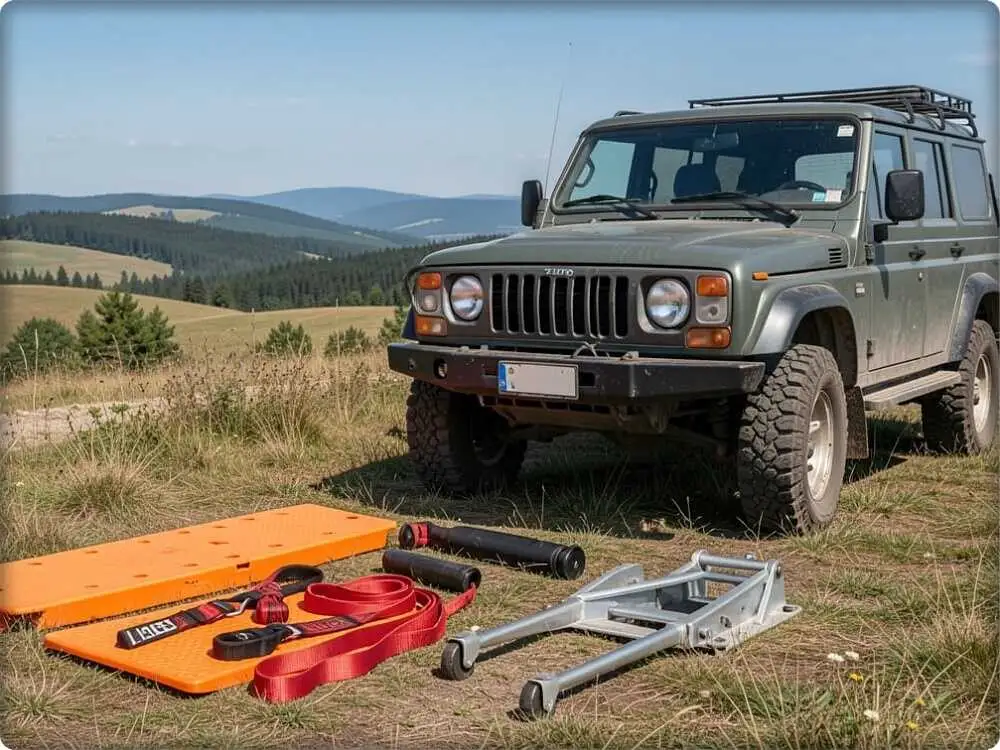
Romania’s off-road conditions are unforgiving on unprepared vehicles. Many forest roads haven’t been graded in years. Water crossings appear without warning. In the mountains, a broken axle can mean a very long wait for recovery — assuming you have mobile coverage to call for help at all.
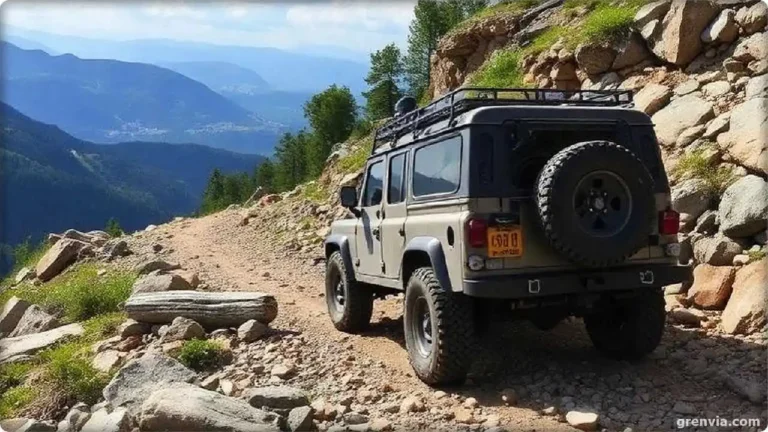
In practice, the minimum viable vehicle for serious Romanian off-road driving is a true four-wheel-drive system with low-range gearing — not merely an all-wheel-drive crossover. Ground clearance matters more than engine power. A vehicle sitting below 200mm off the ground will struggle on routes that a well-prepared Land Rover Defender or Toyota Land Cruiser handles without issue.
Tyres are arguably the single most important variable. All-terrain rubber makes a meaningful difference on loose gravel and mud. Standard road tyres — even wide, premium ones — simply don’t grip adequately when a steep ascent turns wet. Many travelers discover too late that their “capable SUV” was sold as an off-road vehicle but equipped with summer touring tyres from the factory. Check your spec sheet before assuming otherwise.
For a complete breakdown of preparation before entering Romanian terrain, the guide on preparing your vehicle for off-road in Romania covers suspension upgrades, recovery gear, and tyre selection with practical detail.
Minimum Recommended Recovery and Safety Equipment
- High-lift jack or air jack
- Recovery straps and rated shackles
- Traction boards (sand ladders)
- Full-size spare tyre — not a space-saver
- Portable compressor for tyre pressure adjustment on track
- Basic tool kit and reserve fluids (engine oil, coolant, brake fluid)
- First aid kit and emergency supplies for at least 48 hours
When Is the Best Time to Go Off-Roading in Romania?
Timing matters enormously. Romania’s mountain terrain doesn’t follow a simple summer/winter divide. Snow can linger on high passes well into May. Early autumn storms can make trails impassable overnight. And spring snowmelt turns compacted forest tracks into wheel-deep mud with very little warning.
| Month | Mountain Conditions | Recommended? |
|---|---|---|
| April – May | Snowmelt, muddy tracks, unpredictable conditions at altitude | Low-altitude routes only |
| June – July | Dry, accessible, peak visibility | Ideal |
| August – September | Warm with occasional storms, generally good access | Ideal |
| October | Early frost at altitude, autumn colours at their best | Good with caution |
| November – March | Snow, ice, many forest roads officially closed | Experienced drivers only |
The practical window for most travelers is June through September. High-altitude passes such as Transalpina (DN67C) open to traffic only once snow clearance is complete — which varies year to year and isn’t always communicated in advance on international travel platforms.
What Most Off-Road Travel Guides Don’t Tell You About Romania
Experience shows that the most serious risks on Romanian off-road routes aren’t technical — they’re logistical. Here are the details that rarely appear in popular travel blogs.
Mobile Coverage Disappears Fast in the Mountains
Romania has excellent 4G coverage in cities and along major national roads. In the mountains, that coverage drops away quickly. Many valleys and ridgeline tracks have zero signal for stretches of 20 kilometres or more. Downloading offline maps via apps like OsmAnd or maps.me before departure isn’t a backup plan — it’s the primary navigation strategy. A paper topographic map of your region is worth having as a secondary fallback.
Fuel Availability Is Uneven Outside Main Corridors
Petrol and diesel stations are plentiful along national roads, but they become genuinely scarce once you leave main transport corridors. In rural Transylvania and the Apuseni region, 60–80 kilometres between fuel stops is common. One of the most common mistakes among first-time visitors is underestimating range requirements and arriving at a remote trailhead with insufficient fuel for the return leg. Carry a spare jerrycan if your route extends deep into any of these areas.
Forestry Staff Have Enforcement Authority
Romsilva employees and local forestry district personnel have the legal authority to stop, check, and fine vehicles accessing restricted forest roads. Fine levels aren’t trivial. In most real-world situations, a polite conversation at a control point resolves any ambiguity — but driving past a clearly marked restriction barrier in the hope that no one is watching is a gamble not worth taking.
Brown Bears Are Present in Significant Numbers
Romania hosts the largest brown bear population in Europe outside of Russia. According to data published by the Romanian Ministry of Environment, Waters and Forests, bear incidents involving vehicles are rare but not unknown in heavily forested areas. This isn’t a reason to avoid the backcountry — it’s a reason to camp and travel sensibly. Don’t leave food in your vehicle overnight, and keep a clean camp in any area where bear signs are visible.
How to Plan a Safe Romanian Off-Road Route from Scratch
Start with the region, not the route. Decide first whether you’re prioritizing technical challenge, scenery, isolation, or practical accessibility — then build your itinerary around that intent rather than working backwards from a list of coordinates.
Use a combination of satellite imagery (Mapy.cz has particularly strong topographic data for Romania) and local community sources. Romanian off-road forums and Facebook groups maintained by local 4×4 clubs contain current route reports that are far more accurate than any printed guidebook. Tracks that were passable two seasons ago may be washed out or officially closed now.
Plan your daily stages conservatively. A forest road that looks like 30 kilometres on a map can take four hours to drive. Build in flexibility — both in daily distance targets and in your return deadline. If you’re new to multi-day off-road trips, the broader principles of route pacing and contingency planning in our road trip planning guide for long drives translate directly to this kind of journey.
Pre-Departure Checklist
- Confirm regional access rules and permit requirements for every area on your route
- Download offline maps covering the full route plus a 30km buffer on each side
- Check your recovery kit against the specific terrain type you’ll encounter
- Identify all fuel stations within range of your planned corridor
- Share your full planned route and expected return date with someone not travelling with you
- Check regional weather forecasts for at least three days ahead of departure
- Verify that your Rovinieta is valid for the full duration of your trip
Planning Your Romanian Off-Road Adventure: The Bottom Line
A well-planned Romanian off-road adventure rewards effort in ways few European destinations can match. The terrain is genuinely wild, the landscapes are extraordinary, and the sense of remoteness — rare on a continent this developed — is real and earned. But that wildness has a cost: things go wrong faster and with less support than you’d encounter on a managed trail system elsewhere in Europe.
The practical recommendation is straightforward. Treat the planning phase with the same seriousness as the drive itself. Verify your permits, prepare your vehicle properly, carry navigation that works without a mobile signal, and build enough margin into your schedule for the unexpected. Romania doesn’t punish the adventurous — it simply has little patience for the underprepared.
Frequently Asked Questions
Do you need a permit to drive off-road in Romania?
It depends on the specific area. Forest roads managed by Romsilva may require an access permit, and national parks such as Retezat restrict motorized access to designated corridors only. All vehicles using public roads — including classified forest roads — must carry a valid Rovinieta road vignette. Always verify area-specific rules before departure rather than assuming open access.
What is the best region for off-road driving in Romania?
The Southern Carpathians offer the most diverse and technically rewarding off-road terrain in Romania, with routes ranging from moderate gravel tracks to demanding rocky climbs. The Apuseni Mountains are an excellent alternative for scenic trails with less traffic. The Danube Delta suits drivers looking for a flat, wetland-specific challenge that’s unlike anything else in Europe.
Is Romania suitable for overlanding?
Yes — Romania is widely considered one of Europe’s best overlanding destinations. The Carpathian Mountains, Transylvania, and the Danube Delta provide varied and largely unspoiled terrain. Infrastructure outside major cities is limited, which suits experienced overlanders but requires careful planning around fuel, navigation, and communication in remote areas.
What vehicle do I need for Romanian forest roads?
A genuine four-wheel-drive vehicle with low-range gearing and adequate ground clearance — 220mm or above is a practical minimum — handles Romanian forest roads comfortably. All-terrain tyres are strongly advised. Standard all-wheel-drive crossovers fitted with road tyres are often insufficient for technical mountain tracks, particularly after rainfall or during snowmelt conditions.
When do Romanian mountain passes open for the season?
Most high-altitude mountain passes open between late May and mid-June, depending on annual snowfall. Transalpina (DN67C) and Transfăgărășan (DN7C) both have official seasonal openings that vary year to year. Checking current road status through the Romanian National Road Company (CNAIR) before departure is strongly recommended rather than relying on fixed calendar dates.
Follow WheelsFree on Facebook
Get practical car maintenance tips, driving advice, troubleshooting guides, and useful automotive updates published regularly on Grenvia.
Follow the Facebook PageI am Georg Planko, a travel expert and a key figure at Grenvia (FreeWheels). My mission is to give you the freedom and comfort you deserve during your journeys. With a focus on reliability and a passion for the road, I ensure that grenvia.com remains your trusted authority for adventures on two and four wheels.