

📅 Published on October 6, 2025 🔄 Updated on May 6, 2026
Driving in Romania Essential Tips Guide, because, driving in Romania offers unparalleled freedom to explore one of Europe’s most scenic and underrated destinations, from the legendary Transfagarasan Highway to medieval Transylvanian villages and the wild beauty of the Carpathian Mountains. However, Romanian roads present unique challenges that catch unprepared travelers off guard—from aggressive driving culture in cities to livestock wandering rural highways, and from confusing parking regulations to strictly enforced speed cameras.
Romania ranks among the European Union countries with the highest traffic fatality rates, with the European Commission reporting 86 deaths per million inhabitants in 2022—nearly double the EU average. These sobering statistics don’t mean you should avoid driving in Romania, but they underscore the importance of preparation, awareness, and defensive driving strategies. If you’re heading into the highlands, my guide on Driving in Romania’s Mountains: Complete Safety Guide + 7 Dangerous Roads to Know gives you a detailed, pass-by-pass breakdown of what to expect.
Driving in Romania Essential Tips Guide
Whether you’re planning a romantic Transylvanian road trip, navigating Bucharest’s chaotic streets, or embarking on an epic journey along the country’s spectacular mountain routes, this comprehensive guide provides everything you need for safe, legal, and enjoyable driving experiences throughout Romania. Let’s explore the essential tips that will transform your Romanian driving adventure from stressful to spectacular. Vehicle prep matters even more when you’re taking on hidden road trip destinations in Europe, where service stations and paved roads can be less predictable.
Let’s be honest: Romanian roads will test you. That pothole-riddled stretch between villages? It’ll make you question your suspension. The driver who just overtook you on a blind mountain curve? He’ll make your heart skip. But here’s what guidebooks won’t tell you: navigating these challenges successfully transforms you from a tourist into a traveler who’s truly earned the right to brag about conquering the Transfagarasan. This isn’t sanitized, guided-tour Romania—this is the real thing, raw and beautiful and occasionally infuriating.
Understanding Romania’s Driving Documentation Requirements
International Driving Permit and License Validity
Romania driving rules require foreign visitors to carry specific documentation. EU and EEA citizens can drive using their national driving licenses without additional permits. However, travelers from countries outside the European Economic Area should obtain an International Driving Permit (IDP) before arriving in Romania, though enforcement varies.
Your IDP must accompany your original national driver’s license—it serves as a translation, not a replacement. Romanian police can request both documents during traffic stops, and car rental companies typically require them for non-EU drivers.
Essential documents for driving in Romania:
- Valid national driver’s license (must be carried always)
- International Driving Permit (recommended for non-EU/EEA drivers)
- Vehicle registration documents (if driving your own car)
- Valid insurance certificate (minimum third-party liability)
- Passport or national ID card
- Vignette sticker proof (highway toll payment)
Vehicle Insurance Requirements
Third-party liability insurance (RCA – Răspundere Civilă Auto) is mandatory in Romania. EU insurance policies with Green Card coverage extend to Romania automatically, but verify your policy includes Romania specifically before departure.
Non-EU visitors must purchase Romanian insurance at the border if their existing coverage doesn’t apply. Border insurance offices sell temporary policies ranging from 15 days to one year. Comprehensive coverage (CASCO) remains optional but provides valuable protection given Romania’s accident rates and road conditions.
Cross-Border Travel Considerations
If you’re renting a car in Romania for travel to neighboring countries, confirm cross-border permissions with your rental agency. Many companies restrict or charge additional fees for travel to Moldova, Ukraine, or Serbia. Hungary, Bulgaria, and EU countries generally present no issues, but always verify specific rental contract terms.
Mastering Romania’s Vignette System (Rovinieta)
How the Electronic Vignette Works
Romania abolished physical vignette stickers in 2022, transitioning to an entirely electronic system called “Rovinieta.” You must purchase this digital highway toll before driving on any Romanian national roads and highways—it’s not limited to major expressways.
The electronic vignette links to your vehicle’s license plate number and can be purchased online through the official portal (roviniete.ro), at border crossings, gas stations, and selected shops. International travelers can complete the purchase process in English, paying by credit card.
Vignette pricing structure (2024):
- 7 days: approximately €3
- 30 days: approximately €7
- 90 days: approximately €13
- 1 year: approximately €28
Prices vary slightly based on vehicle category. Motorcycles, cars, and vehicles under 3.5 tons fall into the same pricing tier, while larger vehicles and trailers cost more.
Purchase Process and Activation Timeline
The vignette activates within 1-4 hours of purchase, creating a critical window where you technically lack valid authorization. Plan accordingly by purchasing before your journey begins or at your first stop after entering Romania.
Always retain your purchase confirmation email or receipt. While the system operates electronically and police can verify validity through license plate databases, having proof prevents disputes and expedites interactions during traffic stops.
Enforcement and Penalties
Automated cameras and police spot checks enforce vignette compliance rigorously. Driving without a valid Rovinieta results in fines ranging from 200-400 RON (€40-80), plus the cost of purchasing the required vignette immediately. Foreign registered vehicles receive no special consideration—enforcement applies equally to all vehicles.
Highway and Expressway Quality
Romania’s highway network remains limited compared to Western European standards, with approximately 900 kilometers of motorways (autostrăzi) connecting major cities. The A1 (Bucharest-Pitești), A2 (Bucharest-Constanța), and A3 (Bucharest-Cluj) represent the country’s main expressways, featuring generally good pavement quality and modern standards.
However, Romania road conditions deteriorate significantly on secondary routes. National roads (DN designation) range from excellent newly-paved sections to pothole-riddled stretches requiring constant vigilance. Road quality can change dramatically within short distances, demanding continuous attention and speed adjustments.
Rural and Mountain Road Challenges
Romania’s spectacular mountain roads like the Transfagarasan and Transalpina offer breathtaking scenery but present serious challenges:
Common rural road hazards include:
- Sudden deep potholes appearing mid-lane without warning
- Horse-drawn carts traveling at walking pace without lights or reflectors
- Livestock (cows, sheep, horses) wandering freely on roadways
- Pedestrians walking on roads lacking sidewalks
- Slow-moving agricultural machinery occupying lanes
- Inadequate road markings and missing reflector posts
- Limited lighting on otherwise busy routes
Mountain passes typically remain closed from November through April or May depending on snowfall, with specific closure dates varying annually. The Transfagarasan’s opening around late June creates a tourist surge—visit early morning or weekdays to avoid crowds.
Urban Infrastructure and City Driving
Bucharest and major Romanian cities feature dense traffic, aggressive driving culture, and infrastructure challenges. Potholes afflict urban streets almost as severely as rural roads, while parking scarcity creates constant frustration.
Many city streets lack clear lane markings, and drivers interpret lanes as suggestions rather than rules. Expect vehicles to create unofficial additional lanes during peak hours, particularly in Bucharest. Tram tracks complicate navigation—always yield to trams and avoid driving on tram-only lanes marked by distinct pavement.
Understanding Romanian Traffic Laws and Regulations
Speed Limits and Enforcement
Romanian speed limits follow European conventions with strict enforcement through fixed cameras, mobile radar, and police patrol stops:
Standard speed limits:
- Urban areas: 50 km/h (31 mph)
- Open roads: 90 km/h (56 mph)
- Expressways: 100 km/h (62 mph)
- Highways: 130 km/h (81 mph)
Speed cameras operate extensively throughout Romania, particularly approaching and within towns. The distinctive cameras feature bright yellow markings, but newer installations blend into surroundings. Many cameras photograph both directions simultaneously.
Fines for speeding start around 300 RON (€60) for minor violations and escalate to 1,450 RON (€290) for extreme speeding. Foreign drivers cannot evade payment—rental companies charge fines to credit cards months after returns, while border authorities can prevent departure until fines are settled.
Alcohol Limits and DUI Enforcement
Romania enforces a strict zero-tolerance alcohol policy: the legal blood alcohol limit is 0.00%. Any detectable alcohol in your system results in severe penalties including heavy fines (2,900-14,500 RON), license suspension, and potential criminal prosecution.
Police conduct frequent random alcohol checkpoints, particularly Friday and Saturday evenings. Refusing a breathalyzer test carries the same penalties as drunk driving conviction. The message is clear: if you drink any alcohol, do not drive in Romania under any circumstances.
Mandatory Equipment Requirements
Romanian law requires specific safety equipment in all vehicles, and police check compliance during traffic stops:
Mandatory vehicle equipment:
- Warning triangle (reflective triangle for roadside emergencies)
- First aid kit (must be unexpired and complete)
- Fire extinguisher (minimum 1 kg capacity)
- Reflective vest (must be accessible from inside vehicle, worn when exiting)
- Winter tires (November 1 – March 31 when conditions require)
Rental cars should include all required equipment, but verify before departure. Missing equipment results in fines and potential vehicle impoundment until compliance is achieved.
Driving in Romania follows standard right-hand traffic with vehicles yielding to traffic from the right at unmarked intersections. However, actual practice often diverges from legal requirements, with aggressive drivers forcing their way into traffic regardless of right-of-way rules.
Roundabouts (sensuri giratorii) create particular confusion. Legally, vehicles already in the roundabout have priority, but many Romanian drivers enter aggressively, forcing circulating traffic to brake. Drive defensively, assume other drivers will not yield, and maintain escape routes.
Pedestrian crossings theoretically require vehicles to yield to pedestrians, but enforcement proves sporadic and compliance rates remain low. As a pedestrian, never assume vehicles will stop; as a driver, actually yielding to pedestrians distinguishes you from local traffic patterns.
Mastering Bucharest Driving and Parking Challenges
Bucharest traffic ranks among Europe’s most challenging urban driving environments. The city lacks adequate infrastructure for its vehicle density, creating perpetual congestion during business hours. Rush hour transforms major arteries into parking lots from 7:30-10:00 AM and 5:00-8:00 PM weekdays.
Bucharest driving survival strategies:
- Avoid driving during peak hours whenever possible
- Use GPS navigation with real-time traffic updates (Waze works exceptionally well)
- Plan routes with multiple alternatives
- Budget double the expected travel time for important appointments
- Maintain constant vigilance for aggressive lane changes and sudden stops
- Expect traffic rules to be treated as suggestions rather than requirements
Many Bucharest drivers create their own lanes, drive on tram tracks illegally, and block intersections routinely. Defensive driving becomes paramount—always maintain following distance and anticipate irrational behavior from surrounding vehicles.
Decoding Parking Regulations and Payment Systems
Parking rules in Bucharest Romania create extraordinary confusion through inconsistent enforcement, multiple payment systems, and inadequate signage. The city operates zoned parking with different rates and time limits depending on location.
Parking zone colors indicate pricing:
- Red zones (central areas): 6-7 RON per hour, 2-hour maximum
- Yellow zones (intermediate): 4-5 RON per hour, 3-hour maximum
- Green zones (peripheral): 2-3 RON per hour, 4-hour maximum
Payment options include SMS (complicated for foreign visitors), parking apps (multiple competing systems), and physical payment stations (often broken or missing). Many drivers simply risk parking illegally, as enforcement remains inconsistent.
Underground parking garages and monitored lots provide stress-free alternatives costing 15-30 RON for several hours. Major hotels offer parking for non-guests at reasonable rates, providing secure, predictable options worth the premium cost.
Common Parking Scams and Enforcement Issues
Beware unofficial “parking attendants” demanding immediate payment at on-street parking locations. These individuals operate scams, pocketing money while providing worthless receipts. Official payment occurs only through apps, SMS systems, or official payment machines—never to individuals.
Legitimate parking enforcement officers (polițiști locali) wear official uniforms and issue tickets documenting specific violations. If you receive a parking ticket, pay promptly through official channels to avoid escalating penalties. Rental companies charge parking fines to credit cards plus administrative fees.
Illegally parked vehicles in Bucharest face wheel clamps or towing to impound lots. Retrieval requires paying all fines plus storage fees, consuming hours of frustrating bureaucracy. The inconvenience and cost far exceed any parking fee you might have saved.
Driving Defensively: Romanian Road Culture and Behavior
Understanding Aggressive Driving Patterns
Romania driving rules exist on paper, but actual road culture diverges significantly from legal requirements. Romanian drivers often exhibit aggressive behaviors that shock visitors accustomed to more orderly traffic environments:
Common aggressive driving behaviors:
- Tailgating at high speeds to pressure slower vehicles
- Overtaking on blind corners and approaching brow of hills
- Flashing headlights aggressively demanding you move aside
- Passing on the right shoulder when lanes are congested
- Ignoring red lights particularly late at night
- Cutting across multiple lanes without signaling
These behaviors don’t indicate hostility toward you personally—they represent normalized patterns. Never engage in aggressive responses or attempts to “teach lessons” to dangerous drivers. Maintain defensive positioning, let aggressive drivers pass, and focus on your own safe operation.
Rural Driving Hazards and Livestock Encounters
Rural Romanian roads present unique hazards rarely encountered in Western Europe. Horse-drawn carts remain common transportation methods in villages and rural areas, traveling at walking pace often without lights, reflectors, or any visibility-enhancing equipment.
Livestock frequently wander roads freely, particularly during morning and evening hours when shepherds move animals between pastures. Encountering cows, sheep, horses, or pigs standing in travel lanes requires careful navigation—animals are unpredictable and may bolt in any direction when startled by vehicles.
Rural driving safety protocols:
- Reduce speed significantly when approaching villages
- Scan far ahead for animals, carts, or pedestrians on roadways
- Never assume animals will move predictably
- Use horn sparingly as loud noises may panic animals into your path
- Budget extra travel time for unexpected delays from livestock
- Avoid night driving on rural roads when visibility hazards multiply
Police Stops and Traffic Enforcement
Romanian police (Poliția Română) conduct frequent traffic stops for document checks, speed enforcement, and equipment verification. Stops occur at fixed checkpoints or when patrol officers signal you to pull over.
When stopped by police:
- Pull over safely at the earliest legal opportunity
- Turn off engine and remain in vehicle unless instructed otherwise
- Have documents ready (license, IDP, insurance, vignette confirmation)
- Remain polite and cooperative regardless of language barriers
- Do not offer bribes under any circumstances—corruption crackdowns have made this dangerous
- Request receipts for any fines paid directly to officers
- If asked to pay fines at police stations, verify legitimacy through embassy contacts
Most Romanian police officers remain professional and courteous with foreign drivers. Understand that language barriers create most tension during traffic stops—patience and respect overcome most communication challenges.
Seasonal Driving Conditions and Winter Preparations
Winter Driving Requirements and Challenges
Romanian winters transform road conditions dramatically, with heavy snowfall affecting mountain regions and periodic snow in lowland areas including Bucharest. Winter tires become mandatory when weather conditions require them (officially November 1 through March 31, but enforcement focuses on actual conditions).
Mountain passes receive substantial snowfall from October through April, with complete road closures common. Major routes like the Transfagarasan close entirely for six months, while other mountain roads become passable only with snow chains and winter-prepared vehicles.
Winter driving essential equipment:
- Winter tires with minimum 4mm tread depth (M+S or 3PMSF marking)
- Snow chains (mandatory for mountain roads during winter)
- Ice scraper and de-icer spray
- Emergency supplies (blankets, food, water, flashlight)
- Fully charged phone with offline maps
Many Romanian drivers switch to winter tires reluctantly late in the season and abandon them early in spring, creating hazardous situations when sudden weather changes catch drivers unprepared. Foreign visitors should maintain winter equipment throughout the official season regardless of current conditions.
Summer Tourist Season Traffic
July and August bring massive tourist traffic to popular destinations like Brașov, Sibiu, and the Transfagarasan Highway. Expect substantial congestion, parking difficulties, and inflated prices during peak summer weeks.
The Transfagarasan becomes particularly congested after late June opening, with weekend traffic creating multi-hour delays at bottleneck points. Visiting mid-week or during early morning hours provides dramatically better experiences with manageable traffic volumes.
Summer also brings increased police presence at tourist destinations, with stricter enforcement of parking violations, speed limits, and documentation checks. Budget additional time for traffic delays and increased checkpoint stops during summer travel.
Fuel, Services, and Roadside Assistance Considerations
Gas Stations and Fuel Types
Romanian gas stations (benzinării) appear regularly along major routes but become scarce on secondary roads. Major chains like OMV, Petrom, Rompetrol, and Mol operate modern stations with convenience stores, clean facilities, and card payment options.
Fuel prices in Romania remain among Europe’s lowest, though still significantly higher than North American prices. Payment typically requires chip-and-PIN credit cards—contactless and magnetic stripe cards work less consistently at automated pumps.
Common fuel types:
- Benzină (petrol/gasoline): 95 and 98 octane available
- Motorină (diesel): Standard diesel for most vehicles
- GPL (LPG): Autogas available at many stations for converted vehicles
Always verify fuel type before pumping—pump handle colors aren’t standardized across all stations. Misfueling rental cars results in massive costs, as engine damage from wrong fuel requires complete system draining and potential component replacement.
Roadside Assistance and Emergency Services
European emergency number 112 works throughout Romania for police, ambulance, and fire services. English-speaking operators handle most calls, though response quality and speed vary dramatically between urban and rural locations.
Car rental Romania agreements typically include roadside assistance numbers specific to the rental company. Program these numbers into your phone immediately upon rental pickup. Response times range from 30 minutes in cities to several hours in remote mountain regions.
For personal vehicles, European breakdown coverage or Romanian automobile club membership (ACR – Automobil Clubul Român) provides peace of mind. International insurance policies should verify Romanian coverage specifically, as some exclude Eastern European countries.
Mechanical Services and Repair Availability
Finding qualified mechanics in Romanian cities proves straightforward, with authorized dealers for major brands present in Bucharest, Cluj-Napoca, Timișoara, and other large cities. Rural areas offer basic repair services but may lack specialized diagnostic equipment or genuine parts.
Many Romanian mechanics demonstrate impressive improvisation skills, creating workable solutions with limited resources. However, rental car repairs should go through official channels to avoid contract violations and insurance complications.
Reliable navigation proves essential for driving in Romania given inconsistent road signage, confusing urban layouts, and frequent construction detours. Google Maps provides comprehensive coverage but sometimes suggests impractical routes through poorly maintained roads.
Waze excels for real-time traffic conditions, police location alerts, and hazard warnings from community reporting. The active Romanian Waze community marks road hazards, construction zones, and police checkpoints promptly. Speed limit warnings help avoid costly tickets from ubiquitous cameras.
Download offline maps before departure to remote regions where mobile signal becomes unreliable. Mountain areas and rural regions frequently lack coverage, rendering real-time navigation impossible without offline mapping capabilities.
Mobile Coverage and Communication
Romanian mobile networks (Orange, Vodafone, Telekom) provide excellent coverage in cities and along major routes. Rural and mountain areas experience gaps, though coverage has improved substantially in recent years.
EU visitors benefit from roaming-free data under EU regulations, while non-EU travelers should consider purchasing Romanian SIM cards for affordable data access. Prepaid SIM cards cost 5-10 euros with substantial data allowances, available at network shops and many convenience stores.
Toll Roads and Digital Payments
Beyond the mandatory vignette system, Romania has limited toll roads. The A3 highway section between Turda and Gilău operates a pay-per-use toll booth accepting both cash and cards.
Parking apps like ParkPay, mPay, and TelPark facilitate urban parking payment, though you’ll need Romanian mobile numbers for SMS-based systems. Credit card integration exists but works inconsistently. Many foreign visitors find parking garages simpler than wrestling with multiple incompatible payment systems.
Cultural Awareness and Local Driving Etiquette
Horn Usage and Communication Signals
Romanian drivers use horns liberally compared to Western European standards, though less aggressively than some Mediterranean countries. Horn honking communicates various messages from friendly warnings to angry frustration:
Common horn signal meanings:
- Single quick tap: “I’m here” or “Watch out”
- Multiple short honks: “Hurry up” or “Move aside”
- Extended blast: Serious warning or anger
- Honk-and-wave: Greeting to known drivers
Don’t interpret every horn blast as personal attack. Most horn usage represents communication rather than aggressive behavior. However, avoid excessive horn use yourself—let locals’ driving speak through their horns while you maintain calm composure.
Dealing with Bribery Attempts and Corruption
Romania has made substantial progress combating police corruption, but occasional situations arise where officers hint at unofficial “fine” payment. Never offer bribes directly—doing so can result in immediate arrest for attempted bribery.
If an officer suggests paying fines directly rather than through official channels, politely request written documentation, ask to pay at police stations, or contact your embassy if pressure intensifies. Most officers will back down when you demonstrate awareness of proper procedures.
Modern dashcams provide evidence during questionable interactions. Many Romanian drivers install cameras specifically to document police stops and accident situations. Your presence as a foreign driver with dashcam evidence makes corrupt practices less likely.
Understanding Regional Driving Variations
Driving culture varies notably between regions. Transylvania’s mountain cities like Brașov and Cluj-Napoca demonstrate somewhat more orderly traffic patterns with better infrastructure maintenance. Moldavia’s rural character brings slower-paced traffic with more agricultural vehicles and livestock.
Western Romanian cities near Hungarian borders show Central European influences with stricter traffic rule adherence. Meanwhile, Bucharest and Wallachia embody the stereotype of aggressive, chaotic Romanian driving most dramatically.
Adjust your driving style and expectations based on regional characteristics. What works perfectly in orderly Cluj might prove inadequate for Bucharest’s chaos, while rural Moldavian roads demand entirely different hazard awareness.
Exploring Romania’s Most Spectacular Driving Routes
The Legendary Transfagarasan Highway
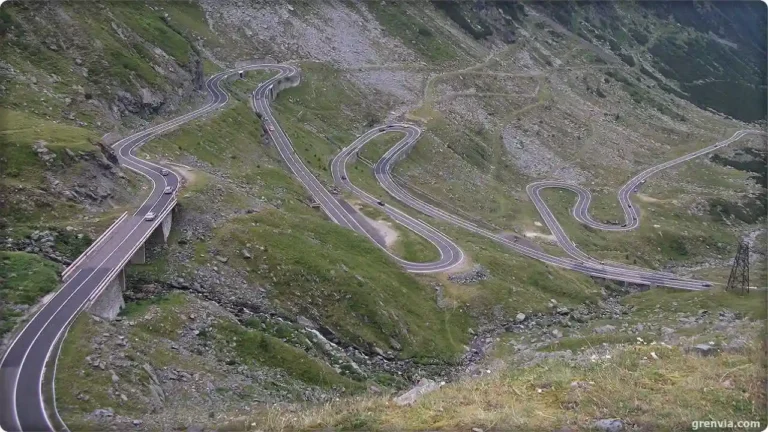
The Transfagarasan Highway (DN7C) crosses the Făgăraș Mountains as Romania’s most famous road and arguably one of the world’s most spectacular drives. Built in the 1970s as a military route, the road features dramatic hairpin turns, glacial lakes, tunnels, and breathtaking alpine scenery.
Open typically late June through October depending on snowfall, the Transfagarasan attracts massive tourist crowds during summer weekends. The 90-kilometer route crosses the mountains between Curtea de Argeș and Cârțișoara, reaching maximum elevation at 2,042 meters near Bâlea Lake.
Allow minimum 3-4 hours for the crossing including photo stops, though traffic congestion can double this time during peak periods. Start early morning or visit weekdays for optimal experiences with manageable traffic volumes.
The Transalpina: Romania’s Highest Road
The Transalpina (DN67C) crosses the Carpathians at 2,145 meters, claiming the title of Romania’s highest road. Less famous than the Transfagarasan, it offers similar spectacular scenery with lower tourist density and narrower, more challenging sections.
The 148-kilometer route connects Novaci to Sebeș through dramatic mountain landscapes, alpine meadows, and traditional shepherd culture. Open similar months as the Transfagarasan (late June-October), the Transalpina suits confident drivers comfortable with narrow mountain roads featuring steep drop-offs and minimal guardrails.
The Danube Gorge and Iron Gates
The Danube River forms Romania’s southern border with Serbia through a spectacular gorge section near Orșova. The route along the river (DN57) provides stunning water and cliff scenery while remaining accessible year-round with good pavement quality.
The Iron Gates region features historical sites including the ancient Decebalus face carved into cliffs and Tismana Monastery. The route suits travelers seeking dramatic scenery without the altitude and seasonal limitations of high mountain passes.
Conclusion: Embracing Romania’s Driving Adventure
Driving in Romania rewards prepared travelers with unparalleled access to one of Europe’s most beautiful and authentic destinations. From the dramatic Carpathian mountain passes to medieval Transylvanian villages and the cosmopolitan energy of Bucharest, Romania reveals its treasures most fully to those exploring by car.
Yes, Romanian roads present challenges—aggressive urban traffic, unpredictable rural hazards, and infrastructure limitations test even experienced drivers. But these challenges pale compared to the freedom and discoveries that self-drive exploration enables. You’ll reach hidden monasteries, discover welcoming villages unchanged by mass tourism, and experience spectacular mountain scenery at your own pace without tour group constraints.
Success requires preparation: understanding documentation requirements, mastering the vignette system, equipping yourself with proper navigation tools, and most importantly, adopting defensive driving mindsets that anticipate local road culture and conditions. These ten essential tips provide the foundation for safe, legal, and enjoyable Romanian driving experiences.
So purchase your vignette, check your insurance coverage, download offline maps, and prepare for an unforgettable adventure. Romania’s legendary roads await—from the switchbacks of the Transfagarasan to the peaceful beauty of rural Maramureș. Drive safely, respect local conditions, and discover why Romania deserves its reputation as one of Europe’s last great road trip destinations.
Link Suggestions:
For official road safety information and current road conditions, visit the Romanian National Company for Road Infrastructure Management (CNAIR) which provides real-time updates on highway closures, construction zones, and mountain pass accessibility.
For comprehensive travel advisories and consular assistance information, check your home country’s foreign ministry travel advisories for Romania, such as the U.S. Department of State Travel Advisory or UK Foreign Office guidance.
Transfagarasan vs Transalpina detailed comparison, Transfagarasan vs Transalpina 2025, to understand the Transfăgărășan vs. Transalpina rivalry.
Follow WheelsFree on Facebook
Get practical car maintenance tips, driving advice, troubleshooting guides, and useful automotive updates published regularly on Grenvia.
Follow the Facebook PageI am Georg Planko, a travel expert and a key figure at Grenvia (FreeWheels). My mission is to give you the freedom and comfort you deserve during your journeys. With a focus on reliability and a passion for the road, I ensure that grenvia.com remains your trusted authority for adventures on two and four wheels.