

📅 Published on October 18, 2025 🔄 Updated on February 17, 2026
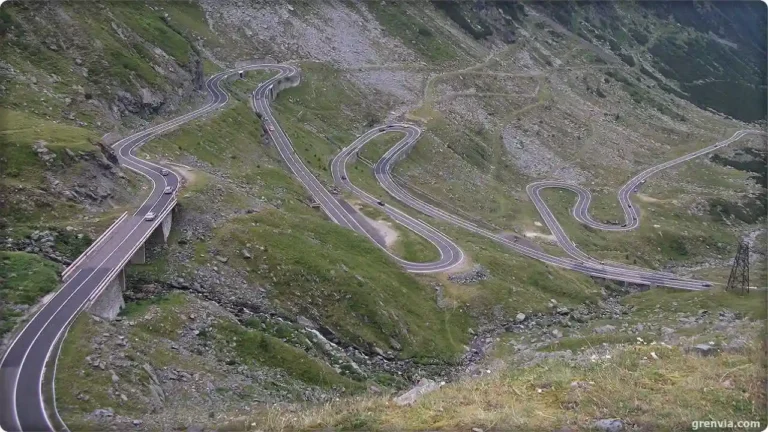
Winter driving in Romania snow road conditions requires specialized preparation due to unpredictable Carpathian weather and frequent mountain pass closures. Essential measures include winter tires (mandatory November-March), emergency kits, reduced speed, and real-time monitoring of road closures via CNAIR or local authorities. Major passes like Transfăgărășan and Transalpina often close mid-November through April, while lower-altitude routes remain passable with extreme caution. Conditions shift rapidly from rain to black ice, making compliance with regulations and preventive equipment non-negotiable.
Romania’s landscapes are breathtaking when blanketed in frost, but winter driving in Romania requires more than just a sense of adventure; it demands meticulous preparation and a deep understanding of speed, load, and vehicle stress to ensure your car handles the grueling Carpathian climbs.
As we move into the 2026 season, local infrastructure has improved, yet the unpredictable snowstorms across the Transylvanian plateau remain a formidable challenge for even the most experienced drivers.
Whether you are navigating the modern A7 motorway sections or winding through the rural charm of Maramures, knowing the latest legal requirements and vehicle preparations is essential. Our updated guide ensures you stay safe while enjoying the majestic Romanian winter. Winter conditions demand a higher level of readiness, as detailed in my comprehensive guide to vehicle reliability for international travel.
Winter Driving in Romania Snow Road Conditions
Winter driving in Romania transforms familiar routes into high-risk challenges where seasonal weather, unpredictable ice, and frequent mountain pass closures demand preparation beyond standard driving skills. Romania experiences some of Europe’s most severe alpine winters, with the Carpathian Mountains generating conditions that close critical routes entirely for months, strand vehicles in whiteout conditions, and transform routine commutes into survival scenarios.
The statistics are sobering: winter causes approximately 20-30% of annual traffic accidents in Romania, with mountain regions accounting for disproportionate fatalities. Yet most drivers remain dangerously underprepared, relying on summer-specification tires, incomplete emergency kits, and insufficient knowledge of road closure patterns. This comprehensive guide provides everything necessary to navigate Romanian winters safely—from legislative requirements and vehicle preparation, to real-time closure monitoring and survival techniques for unexpected emergencies.
Understanding winter driving conditions isn’t optional in Romania; it’s the foundation separating safe, controlled driving from becoming another tragic statistic. The Carpathian Mountains don’t forgive hesitation, overconfidence, or inadequate preparation.
Mandatory Winter Equipment and Legal Requirements
The Legal Essentials: Tires and Equipment
In 2026, Romanian law remains strict regarding winter equipment. It is not date-specific but condition-specific; if there is ice, snow, or slush on the road, you must have winter tires. Ensure your winter car rental Bucharest includes tires with the 3PMSF symbol. Carrying a shovel and a bag of sand is not just practical—it’s often a lifesaver in the rural mountain passes.
Romanian law mandates winter tires from November 1st through March 31st on all roads potentially affected by snow or ice, with penalties of 290-580 RON for non-compliance. The regulation applies universally regardless of actual weather on a given day—you cannot legally operate a vehicle on summer tires during winter months if conditions could support snow/ice, even on sunny days.
Technical specifications required:
- Minimum tread depth: 3mm (legal minimum 1.6mm insufficient for winter)
- Markings: “M+S” (mud and snow) or three-peaked mountain symbol
- Winter tires provide 20-30% better grip than summer tires below 7°C through molecular rubber composition changes
- Performance degrades rapidly below 0°C without proper winter specification
Practical timeline
Purchase winter tires by mid-October (shortage common) and mount them before November 1st. Installation costs 40-60 RON per tire plus tire storage for summer tires (100-150 RON annually).
Emergency Kit Contents: Beyond Legal Minimums
Legal requirements mandate triangle, vest, fire extinguisher, and first aid kit—insufficient for Romanian winter emergencies. Professional winter preparation includes:
Critical survival items:
- Blanket/thermal layer (hypothermia develops rapidly)
- Extra warm clothing (wool or synthetic, not cotton)
- Flashlight with extra batteries
- Jumper cables and portable battery pack
- Thermal gloves and boots
- High-calorie emergency food (chocolate, nuts, energy bars)
- Thermos with hot beverage
- Shovel and sand/cat litter for traction
- Tire chains or snow socks (required Transfăgărășan, Transalpina)
Optional but recommended:
- Multi-tool or emergency repair kit
- Fire starter/waterproof matches
- Mirror for signaling
- Duct tape and electrical tape
- Antifreeze windshield washer fluid
- Engine start aid (ether spray—controversial but effective)
Understanding Romanian Mountain Pass Closures and Seasonal Patterns
Major Pass Closure Schedules and Monitoring Systems
Transfăgărășan (2,134m elevation):
- Typical closure: Mid-November through April/May
- 2024 closure dates: November 10, 2024 – May 15, 2025 (estimated)
- Reason: Avalanche risk, extreme snow accumulation, wind creating impassable conditions
- Alternative: DN7 through Pitești (adds 1.5-2 hours)
Transalpina (2,145m):
- Closure: Early November through May
- 2024: November 5, 2024 – May 20, 2025
- First road in Romania to close seasonally, last to reopen
- Complete seasonal closure—no emergency passage
- Alternative: DN7 + DN1 (adds 3+ hours from Sibiu)
Turnu Roșu Pass (948m):
- Rarely closes completely but becomes treacherous
- Accidents frequent; extreme caution advised
- Winter chains mandatory
Real-time closure monitoring:
Before setting off, check the CNAIR (National Company for Road Infrastructure Administration) live maps. With the expansion of the A7 and A0 motorways in 2026, transit times have decreased, but wind exposure on these open plains can create dangerous “snow dunes” across the lanes.
- Website: cnair.ro with live road status
- SMS alerts: Text “CNAIR” + location code to 8877
- Traffic cameras: 500+ cameras on major routes provide live conditions
- Police radio: 112 emergency updates on closures
- Weather forecasts: National Meteorological Administration (inmet.ro) provides mountain-specific warnings 48-72 hours advance
Off-Season Pass Crossing: Understanding Dangerous Windows
Early winter (November) and spring shoulder seasons (April-May) present greatest hazards: marginal conditions shift rapidly between passable and closed, drivers misjudge risk levels, and officials sometimes delay closures after warning signals. Between official closure and reopening periods, passes become terrain for experienced mountaineers only—not vehicle transport.
Critical principle
Closure announcements represent informed decisions by professionals assessing avalanche risk, accumulated snow depth, and avalanche prediction modeling. Ignoring closures isn’t heroic—it’s fatal. Transfăgărășan kills an average of 2-3 drivers annually attempting to circumvent closures.
Snow Road Conditions: Behavior, Hazards, and Countermeasures
Black Ice and Deceptive Surface Dangers
Modern road treatments in Romania have improved, but “polei” (black ice) remains common in the Prahova Valley. If you aren’t confident in your vehicle’s grip, consider purchasing high-quality snow chains before heading into the Southern Carpathians.
Romanian winter produces insidious black ice (verglas)—nearly transparent ice on road surfaces appearing wet but offering zero traction. Most dangerous characteristics:
- Invisible in shadows, bridge approaches, shaded turns (ice persists here 4-6 hours after main roads thaw)
- Forms during freezing rain or when melted snow refreezes (common afternoon-to-night cycle)
- Bridges freeze before surrounding road; assume all bridges icy below 4°C
- Braking/turning creates instability; steering input increases skidding tendency
Detection and avoidance:
- Temperature display becomes life-saving tool (below 3°C, assume ice presence)
- Road surface changes from wet-reflective to matte appearance signal ice
- Other vehicles’ behavior (sudden speed reduction, erratic movements) indicate conditions
- Sound changes: tires producing hissing noise indicate aquaplaning on ice-water layer
Recovery technique if sliding:
- Remain calm; excessive inputs worsen aquaplaning
- Steer in direction wheels point, not direction travel desired
- Avoid braking during slide (modern ABS prevents lock-up but reduces grip further)
- Wait for tire grip restoration (~100-200ms) before correcting trajectory
- Practice in parking lots builds instinctive responses
Whiteout Conditions and Visibility Collapse
Carpathian mountain storms develop explosive intensity—visibility transitions from normal to 20 meters in minutes. Wind chill accelerates hypothermia; disorientation becomes immediate hazard as road boundaries disappear.
Whiteout survival:
- Reduce speed to 20-40 km/h (instinct wants faster; resist strongly)
- Activate hazard lights (visible farther than headlights in snow)
- High beam worsens visibility through reflection; use low beam only
- Maintain extreme following distance (100+ meters at reduced speed)
- If visibility drops below safe levels, exit road to shoulder (marked with reflectors) and wait
- Never exit vehicle during whiteout unless immediate danger (becoming stranded in vehicle is safer than exposure)
Shelter protocol
If stuck during whiteout, remain in vehicle with engine running (carbon monoxide risk if exhaust blocked—check periodically), maintain fuel supply monitoring, and activate hazard lights.
Practical Winter Driving Techniques and Prevention Strategies
Speed Reduction and Traction Management
Physics becomes tyrannical in winter: kinetic energy remains constant regardless of wheel grip, meaning speed reduction is non-negotiable. Standard advice (reduce speed 30-50%) proves insufficient on ice—even 10 km/h exceeds safe stopping distance on pure ice.
Precise speed guidelines by surface condition:
Wet surface, +5 to +2°C:
Normal speed acceptable with normal following distance (approximately 3 seconds)
Slushy/compact snow, 0 to -2°C:
50% speed reduction; 6-8 second following distance
Black ice/pure snow, below -2°C:
70-80% speed reduction; 15-20 second following distance (roughly 300+ meters at 50 km/h)
Whiteout conditions:
20-30 km/h maximum or exit route entirely
Traction techniques:
- Acceleration: Gentle application prevents wheel spin (visible as slow acceleration seeming impossible)
- Gear selection: Lower gears on inclines provide engine braking without brake application
- Downhill descent: Engine braking in lower gear beats brake overheating and fade
- Curve entry: Reduce speed before curve entry (mid-curve braking creates instability)
- Recovery: If traction loss occurs, avoid correction inputs; wait for grip restoration
Vehicle Preparation Beyond Tires
Engine fluid winterization:
- Synthetic engine oil (0W-30 or thinner per manufacturer) improves cold starting
- Antifreeze concentration: Minimum -20°C protection; -30°C ideal for mountain regions
- Windshield washer fluid rated to -20°C (summer fluid freezes, eliminating visibility)
- Diesel-specific fuel additive prevents gelling (critical for diesel engines below -10°C)
Electrical system stress:
- Battery capacity drops approximately 30% per 10°C temperature decrease
- Professional battery testing recommended pre-winter (free at most service stations)
- Charging system verification: alternator output declines with age
- Starter motor current demand increases substantially in cold; weak batteries fail entirely
Mechanical inspection critical points:
- Coolant hose integrity: Pressure increases in winter; cracks cause immediate overheating
- Brake system: Moisture contamination in brake fluid freezes; bleed brakes before winter
- Wiper blade condition: Frozen windshield demands functional wipers; replace if streaking occurs
- Suspension component inspection: Cold makes rubber brittle; worn bushings become dangerous
Precondition before departure:
- Allow 10-15 minutes warm-up time (modern engines achieve operational temperature faster; traditional advice of 30+ minutes unnecessary)
- Clear all ice/snow from windows, mirrors, lights (improves visibility; improves your visibility to others)
- Monitor instrument panel for warning indicators before entering mountain roads
Emergency Response: Becoming Stranded and Recovery Procedures
Breakdown in Mountain Regions: Immediate Actions
Vehicle failure on Romanian mountain roads during winter creates genuine survival emergency—rescue response times reach 2-4 hours in extreme conditions; temperatures drop to -15°C or colder with wind chill below -25°C.
Initial breakdown response:
- Activate hazard lights immediately upon recognizing failure
- Attempt moving off road to shoulder (reduces collision risk from approaching traffic)
- Exit vehicle only if immediate danger from traffic; remaining in vehicle provides shelter
- Call 112 with precise location (kilometer marker, road direction, landmark descriptions)
- Enable location services on mobile; provide police with GPS coordinates if available
Shelter optimization inside vehicle:
- Close windows completely; cover vents to prevent heat loss
- Run engine 10 minutes per hour with passenger compartment heater maximum; turn off to preserve fuel
- Monitor fuel level continuously; many winter emergencies result from fuel depletion during idling
- Arrange blankets/emergency supplies for maximum insulation
- Activate interior light minimally to preserve battery
Signal visibility:
- Hazard lights visible from significant distances; maintain battery state for continuous operation
- Open hood with scarf/fabric draped over hood edge (indicates mechanical failure to passing motorists)
- Wave brightly colored cloth if rescue appears
Accident Recovery and Post-Collision Procedures
Winter accidents escalate rapidly: secondary impacts from other vehicles occur frequently when traffic doesn’t recognize immobilized vehicles, especially in low-visibility conditions.
Post-accident protocol:
- Verify personal safety; exit vehicle only if no oncoming traffic risk
- Activate hazard lights and place warning triangle 50+ meters behind vehicle (law requires minimum 50m; increase to 100m+ in poor visibility)
- Document accident scene with photographs (insurance, evidence)
- Move to roadside away from traffic; don’t linger on road surface
- Call police (112) even for minor accidents; obtain official report number
- Exchange information with other parties (license, ID, insurance)
- Contact insurance company; obtain claim number and instructions
Insurance implications
Winter-specific consideration—policy may deny claims if vehicles lack winter tires during mandatory periods. Verification essential before winter season.
Conclusion
Winter driving in Romania demands respect for environmental forces operating beyond personal control. The Carpathian Mountains impose conditions where preparation, knowledge, and humility become survival tools. Mandatory winter tires, comprehensive emergency kits, familiarity with real-time closure monitoring systems, and practiced driving techniques form the foundation of winter safety.
Most critically, recognize the boundaries: official pass closures represent informed decisions by professionals managing avalanche risk and accumulated snow burden. Attempting to circumvent these closures transforms driving into Russian roulette—a game where the consequences reach fatal velocity before you recognize the danger.
Prepare thoroughly, drive conservatively, stay informed through CNAIR and National Meteorological Administration updates, and extend grace to other drivers sharing winter conditions. Romanian winters are beautiful; they’re also unforgiving. Respect that duality, and you’ll arrive safely.
Ready to Brave the Romanian Winter?
Don’t let the snow catch you off guard. Ensure your vehicle is prepared, your insurance is updated, and your itinerary is flexible. If you’re looking for the best way to see the sights without the stress of the wheel, book a professional winter transfer today and enjoy the view!
Follow WheelsFree on Facebook
Get practical car maintenance tips, driving advice, troubleshooting guides, and useful automotive updates published regularly on Grenvia.
Follow the Facebook PageI am Georg Planko, a travel expert and a key figure at Grenvia (FreeWheels). My mission is to give you the freedom and comfort you deserve during your journeys. With a focus on reliability and a passion for the road, I ensure that grenvia.com remains your trusted authority for adventures on two and four wheels.