

📅 Published on February 2, 2026 🔄 Updated on March 2, 2026
Successful international road trips depend on meticulous paperwork beyond just a passport. You must carry your original vehicle registration, valid international insurance (like the Green Card), and often an International Driving Permit (IDP). For specific regions, a Carnet de Passages or Temporary Import Permit is mandatory to avoid heavy customs duties. Before diving into document specifics, it helps to review the full framework for perfect planning for a road trip, which covers the wider preparation context.
Planning an international road trip is the ultimate expression of freedom, but that freedom stops abruptly the moment a border guard asks for a document you don’t have. After a decade of overland expeditions across five continents, I’ve learned that the “engine” of your trip isn’t just under the hood—it’s in your glove box. International road trip documents are the legal keys that unlock transit through foreign territories.
Navigating the transition from one legal jurisdiction to another requires more than just a sense of adventure. It requires a technical understanding of international treaties and bilateral agreements. Whether you are tackling the Pan-American Highway or a weekend jaunt through the Alps, the bureaucracy is real. This guide leverages my experience in extreme overlanding to ensure you never find yourself stuck in a “no-man’s land” between checkpoints.
In this guide, I will walk you through the non-negotiable documents you need to ensure that a border crossing remains a minor formality rather than a trip-ending hurdle. For those entering France from a neighboring country by car, reviewing requirements alongside the full practical guide to driving through Provence and the Riviera helps establish a clearer picture of what the complete journey demands administratively.
Personal Identification and Legal Entry Requirements
The foundation of any cross-border journey starts with your personal legal status. While a passport is the obvious starting point, the nuances of its validity can catch even seasoned travelers off guard. Most nations require your passport to be valid for at least six months beyond your intended date of departure.
Beyond the booklet itself, you must account for visas. When driving, you don’t always have the luxury of “Visa on Arrival” that airports offer. Some land borders are not equipped to process visas, meaning you must secure them in advance. This is a critical step in any road trip planning checklist to ensure your route remains viable.
Passport Validity and Visa Scrutiny
Always check if the specific border crossing you intend to use is “international.” Some crossings are only for local citizens of the two bordering countries. I always carry at least four physical passport photos; you’d be surprised how often a random permit or local registration form requires one.
The International Driving Permit (IDP)
The IDP is not a license itself, but a legal translation of your domestic license. It is recognized by over 150 countries under various UN Conventions on Road Traffic. Even if the local police speak your language, the IDP is a standard document they expect to see during a routine stop.
Vehicle Ownership and Customs Documentation
Your vehicle is essentially a large piece of imported “cargo” the moment you cross a line on a map. You must prove you own it and promise you won’t sell it illegally in the host country. This is where most overlanders encounter the steepest learning curves regarding international road trip documents.
In many parts of the world, especially Africa, Asia, and parts of the Middle East, you will need a Carnet de Passages en Douane (CPD). This is a “passport for your car” that acts as a guarantee that you will export the vehicle. If you fail to do so, the issuing organization uses your cash deposit to pay the country’s import taxes.
Title and Registration Originals
Never rely solely on photocopies. While I recommend carrying several high-quality color copies, border officials almost always demand to see the original title or registration document. If the vehicle is financed, you will need a notarized letter from the bank authorizing you to take the vehicle out of the country.
Temporary Import Permits (TIP)
In North and South America, the TIP is the gold standard. When driving across international borders in these regions, you usually receive this document at the customs (Aduana) office. It’s a small piece of paper that is often more valuable than your passport while you are in that country—lose it, and you face massive fines or vehicle seizure.
Always check that the VIN (Vehicle Identification Number) on your paper matches the physical plate on your car before leaving the customs window. A single typo can lead to hours of delays at the next exit point.
Insurance: Protecting Your Assets and Liability
Standard domestic insurance rarely extends across international borders. To maintain legal compliance and financial protection, you must secure “Third-Party Liability” insurance for every country you enter. In the European Union, this is simplified by the “Green Card” system, but elsewhere, it’s a country-by-country effort.
If you are looking for ways to balance these costs, you might consider some fuel saving tips to offset the insurance premiums. International insurance can be expensive, but it is non-negotiable for the responsible traveler.
The Green Card System and COMESA
In Europe, the Green Card proves you have the minimum required insurance. If your home policy doesn’t cover the entire region, you can often buy “Frontier Insurance” at the border. Similarly, in Eastern and Southern Africa, the Yellow Card (COMESA) provides a multi-country insurance solution that saves you from stopping at every single hut for a new policy.
International Health and Medevac Insurance
Vehicle insurance covers the machine, but your body needs its own “registration.” Standard travel insurance often excludes “overland transit” or high-risk driving. Look for policies that specifically include emergency medical evacuation (Medevac). If you’re in a remote part of the Andes, a helicopter ride to a modern hospital can cost upwards of $50,000 without coverage.
Specialized Permits and Local Compliance
Beyond the big three (Passport, Registration, Insurance), certain regions have idiosyncratic requirements. For example, some countries require a “Waybill” or a “Manifest” if you are carrying a significant amount of gear or spare parts. From a technical standpoint, the weight and contents of your vehicle can reclassify you from a “tourist” to a “commercial” entity if you aren’t careful.
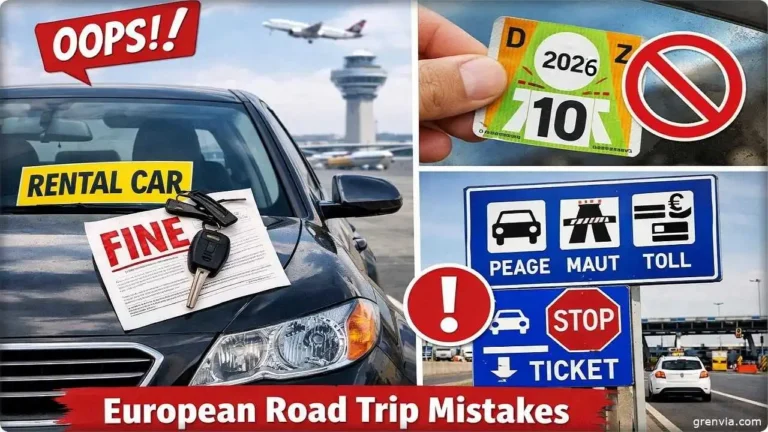
During our research for this article, we observed that many travelers forget about environmental or safety compliance documents. In some European cities, you need an “Eco-sticker” (like the Crit’Air in France) to drive through city centers. Without this small piece of paper, you’re looking at a heavy fine, regardless of your foreign plates.
Health Certificates and Pet Passports
If your road trip includes a furry co-pilot, the paperwork doubles. You will need an International Health Certificate signed by a government-accredited veterinarian. Most borders require proof of a rabies vaccination administered at least 30 days—but no more than 12 months—prior to the crossing.
Vehicle Equipment Requirements
While not a “document” per se, many countries require a specific kit to be legally “documented” as road-worthy. This often includes a fire extinguisher, two warning triangles, and reflective vests for every passenger. In some jurisdictions, failing to produce these during a search is treated the same as driving without a license. Check prices for international road trip safety kits on Amazon
| Document Type | Priority | Region Typically Required |
| Passport (6mo validity) | Critical | Worldwide |
| International Driving Permit | High | Asia, Europe, South America |
| Carnet de Passages (CPD) | High | Africa, Middle East, Australia |
| Temporary Import Permit | Critical | Central & South America |
| Green Card Insurance | Critical | Europe |
| Notarized Exit Letter | Medium | If vehicle is financed/not in your name |
Conclusion
Crossing an international border is more than just a physical move—it’s a bureaucratic transition. Ensuring you have the right international road trip documents is the difference between an epic story and a logistical nightmare. By organizing your vehicle title, securing the correct insurance, and understanding the local permits like the CPD or TIP, you protect both your vehicle and your peace of mind.
Preparation is the hallmark of a professional explorer. Before you turn the key, double-check your folder of originals and your cloud backup of scans. Ready to hit the road? Make sure your gear is as prepared as your paperwork.
Frequently Asked Questions
Can I cross a border if I only have a temporary/provisional license?
Generally, no. Most countries require a full, valid license for international driving. Provisional or “learner” permits are rarely recognized outside their country of origin.
What should I do if my registration document is lost while abroad?
I recommend contacting your local embassy and the nearest police station immediately to get an official report. You will likely need this report to exit the country and re-enter your own.
Is a digital IDP or license valid at a border?
While digital documents are becoming popular, many border crossings in remote or less-developed areas still rely purely on physical paperwork. I never rely on digital-only copies for border crossings.
Follow WheelsFree on Facebook
Get practical car maintenance tips, driving advice, troubleshooting guides, and useful automotive updates published regularly on Grenvia.
Follow the Facebook PageI am Georg Planko, a travel expert and a key figure at Grenvia (FreeWheels). My mission is to give you the freedom and comfort you deserve during your journeys. With a focus on reliability and a passion for the road, I ensure that grenvia.com remains your trusted authority for adventures on two and four wheels.