

Published on March 8, 2026
This 10-day Balkan road trip itinerary offers a strategic route through Montenegro and Albania, emphasizing the transition from coastal Mediterranean charm to the rugged isolation of the Accursed Mountains. It provides a reliable framework for international travelers to navigate complex border logistics, technical mountain passes, and cultural heritage sites. By prioritizing experience-based timing over aggressive mileage, the guide ensures a balanced exploration of Europe’s most authentic landscapes, complete with essential gear recommendations and practical driving insights.
A Balkan road trip itinerary is a journey through a region where history and nature remain deeply intertwined. For international travelers from the US, UK, or EU, this area represents a rare pocket of Europe where traditional hospitality hasn’t been entirely replaced by mass tourism. The geography is unforgiving yet rewarding, moving from the deep turquoise bays of the Adriatic to limestone peaks that rival the Alps in majesty but offer far more solitude. However, navigating this terrain requires more than just a GPS; it demands an understanding of local road textures and bureaucratic nuances.
Successful navigation of this route starts with a solid foundation in road trip planning and long-distance driving. While the distances on the map appear short, the reality of mountain switchbacks and coastal traffic means that a “200-mile day” can easily turn into an eight-hour expedition. This itinerary is specifically designed to account for these regional factors, allowing for meaningful stops in stone-walled towns and high-altitude valleys without the pressure of an over-scheduled transit day.
10-Day Balkan Itinerary: Route Overview
| Days | Region | Primary Focus |
|---|---|---|
| 1-3 | Bay of Kotor & Montenegro Coast | Venetian history and coastal navigation |
| 4-6 | Shkoder & The Accursed Mountains | High-altitude alpine exploration |
| 7-8 | The Albanian Riviera | Coastal passes and Ionian beaches |
| 9-10 | Gjirokastër & Berat | UNESCO heritage and inland logistics |
Source: Grenvia Editorial Team Field Research
Phase 1: The Montenegrin Coast and the Bay of Kotor
The first three days focus on the Bay of Kotor, a UNESCO site where the mountains drop almost vertically into the sea. Driving the perimeter of the bay is a lesson in patience; the road is narrow, often single-lane in the older sections of Perast, and shared with local buses. It is essential to manage your vehicle’s footprint here, as parking in Kotor’s Old Town is restricted to a few designated lots that fill up by mid-morning during the summer season.
As you move south toward Budva, the infrastructure becomes more modern, but traffic density increases significantly. For those used to the predictable flow of Central European motorways, consulting a European road trip and hotel guide can provide a useful baseline for comparing parking security and booking standards. In Montenegro, always confirm that your accommodation provides on-site, off-street parking, as urban street parking often results in localized traffic congestion or restricted access.
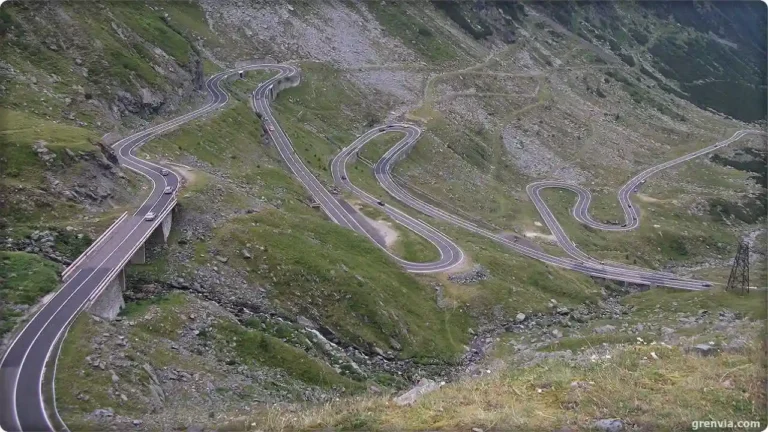
Crossing the border from Montenegro into northern Albania at Hani i Hotit introduces a dramatic change in terrain. The route toward the village of Theth takes you into the heart of the Accursed Mountains (Bjeshkët e Nemuna). While the road to Theth has been recently paved, it remains a technical drive featuring numerous unlit tunnels and sharp hairpins that require constant focus. This area is the epitome of the “wild frontier,” offering isolation and breathtaking limestone scenery.
In these remote zones, self-sufficiency is a necessity. Maintaining a constant power source for navigation and communication gear is a primary concern. A portable solar panel, such as the Goal Zero Nomad 50, can help keep mobile devices and satellite messengers charged during multi-day stays in mountain guesthouses where the electrical grid may be unreliable during storms. However, users should note that solar efficiency drops significantly in deep valleys with limited direct sunlight hours.
Practical Micro-Scenario: The Livestock Roadblock
Imagine driving a narrow mountain pass in northern Albania when you round a corner to find a herd of goats occupying the entire road. There is no shoulder, and the incline is steep. In this situation, the practical observation is to remain stationary and allow the shepherd to guide the animals around you rather than attempting to push through. This scenario illustrates the need for a calm, observational driving style that respects local agricultural rhythms over strict travel schedules.
Misconceptions and Border Realities
A frequent misconception is that a rental car contract for “Europe” automatically covers the Western Balkans. In reality, most agencies require a specific “Green Card” and written authorization to enter Albania and Montenegro. Failure to present the original, physical documents at the border can lead to hours of delay or a forced turnaround. Always check your paperwork before leaving the rental hub to ensure the “AL” and “MNE” boxes are not crossed out.
Furthermore, while the region is becoming more connected, those used to the convenience of island hopping might find the inland logistics more demanding. If you are also considering the Mediterranean coast further south, reviewing a guide on hidden Greek islands beyond Santorini can provide context on how the pace of travel changes once you cross from the rugged Balkan mainland to the more developed Greek maritime routes.
Phase 3: The Llogara Pass and the Southern Interior
The journey continues south toward the Llogara Pass, which stands at over 1,000 meters above sea level and serves as the gateway to the Albanian Riviera. The descent toward the Ionian Sea is spectacular but requires heavy use of engine braking. For drivers not accustomed to long, steep grades, the smell of burning brake pads is a common and avoidable warning sign. Shifting into a lower gear helps maintain a controlled speed without overheating the braking system.
As the itinerary concludes in the historic “stone cities” of Gjirokastër and Berat, the focus shifts to preservation and cultural immersion. The heat in these inland basins can be oppressive, making a high-quality, insulated water bottle like the Hydro Flask 32 oz a vital piece of kit to prevent dehydration during long afternoons of exploring fortress ruins. While excellent at maintaining temperature, these bottles are relatively heavy and can be cumbersome during steep uphill treks on cobbled streets.
Technical Checklist for the Balkan Road
- Ensure you have a physical Green Card insurance document (digital is often not accepted).
- Check tire pressure and coolant levels every 48 hours due to heat and altitude changes.
- Download offline maps (Google Maps or Maps.me) as cellular data is spotty in mountain passes.
- Carry a small emergency kit including a high-visibility vest and a first-aid kit.
Concluding the Balkan Expedition
A 10-day Balkan road trip itinerary is an exercise in adaptability and discovery. This route takes you through some of the most challenging and beautiful terrain in Europe, requiring a blend of technical driving skills and cultural curiosity. While the roads are improving every year, the region’s charm lies in its remaining “wild” elements—the unmapped trails, the roadside hospitality, and the sense of genuine adventure that is increasingly rare elsewhere.
How these factors apply to your trip will depend on the season and your vehicle’s capabilities. Real-world results often vary once the theory of the itinerary meets the practical reality of mountain weather and local border queues. For the traveler who arrives prepared and remains flexible, the Balkans offer a road trip experience that is truly second to none on the continent.
Follow WheelsFree on Facebook
Get practical car maintenance tips, driving advice, troubleshooting guides, and useful automotive updates published regularly on Grenvia.
Follow the Facebook PageI am Georg Planko, a travel expert and a key figure at Grenvia (FreeWheels). My mission is to give you the freedom and comfort you deserve during your journeys. With a focus on reliability and a passion for the road, I ensure that grenvia.com remains your trusted authority for adventures on two and four wheels.